
Green-Certified, Sustainable Event Catering in Sonoma County and Napa Valley

The green choices we make at your event
We strive to make every event as sustainable as possible by making methodical, eco-conscious decisions from the outset. Despite challenges in the catering industry, we continuously work to overcome obstacles and improve the sustainability of our operations.
What Does Sustainable Catering Mean?
The North bay’s first green-Certified caterer
In 2008, Park Avenue Catering became the first Green Certified Caterer in the North Bay through the California Green Business Network, and we have proudly maintained and renewed this certification every four years since.
But what does being a Green Certified caterer actually mean? Green certification through the California Green Business Networks represents a comprehensive commitment to social and environmental responsibility through eight core areas of focus. These include standards such as reduced water use, energy conservation, sustainable commuting, pollution prevention, the use of non-toxic cleaning products, waste reduction, recycling, and hiring local vendors.
Park Avenue Catering pledges to uphold these principles as a guiding framework for how the business operates. These pillars are not treated as optional practices but as foundational standards that shape our decision-making, influence daily operations, and define our long-term approach to running a responsible and sustainable catering company.
Planning Sustainably
The small changes that make a big environmental impact
At Park Avenue, we strive to make green events the standard by planning sustainably from your first consultation. By carefully planning menus, accurately forecasting guest counts, and ordering only what is needed, we reduce unnecessary food waste while helping clients host more sustainable celebrations.
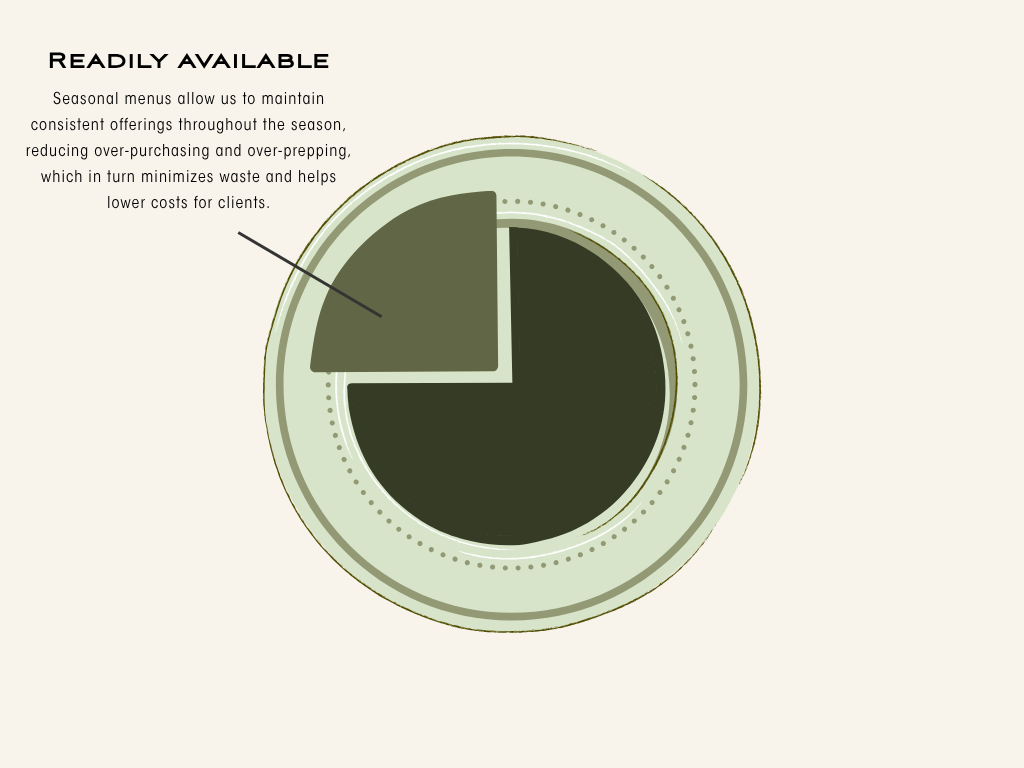
We encourage seasonal menu selections, plated service when appropriate, and reusable china, glassware, and flatware over disposable alternatives. When disposables are necessary, we choose biodegradable products whenever possible.
Behind the scenes, we are equally intentional. We compost food waste from our kitchen and events, recycle materials consistently, donate safe unused food when possible, and re-purpose leftovers for staff meals. We also reuse food storage containers, accurately order rental equipment to eliminate unnecessary transportation and cleaning, and continuously track leftovers to improve future planning.
Our commitment extends to transportation and energy use as well. Staff are encouraged to carpool to events, forgotten items are coordinated with team members already traveling to a venue whenever possible, and we consolidate deliveries with rental partners to reduce vehicle trips. Our fleet is matched to the size of each event, vehicle idling is minimized, and routine maintenance such as proper tire inflation helps improve fuel efficiency.
Within our commissary, we've invested in energy-efficient lighting, kitchen equipment, and dishwashers that reduce water consumption. Skylights provide natural daylight, insulated hot water pipes conserve energy, and lighting timers and refrigerator air curtains help minimize unnecessary electricity use. Equipment is only operated when needed, and food is thawed using efficient methods rather than running water. We've also installed a double-carbon water filtration system and transport drinking water in large reusable containers instead of single-use plastic bottles, preventing more than 15,000 plastic bottles from entering landfill each year.
Even our office reflects these values. Contracts, event planning, and client communications are managed electronically where possible, significantly reducing paper use. Additionally, printing is kept to a minimum and bulk ink systems replace disposable cartridges.
Together, these everyday decisions allow us to reduce waste, conserve resources, support our local community, and deliver exceptional events with a lighter environmental footprint.
Going Local
The Tastiest pillar of green catering
Founded by Chef Riezenman, a pioneer of the farm-to-table movement in both New York and California, our culinary approach has always centered on locally sourced ingredients.
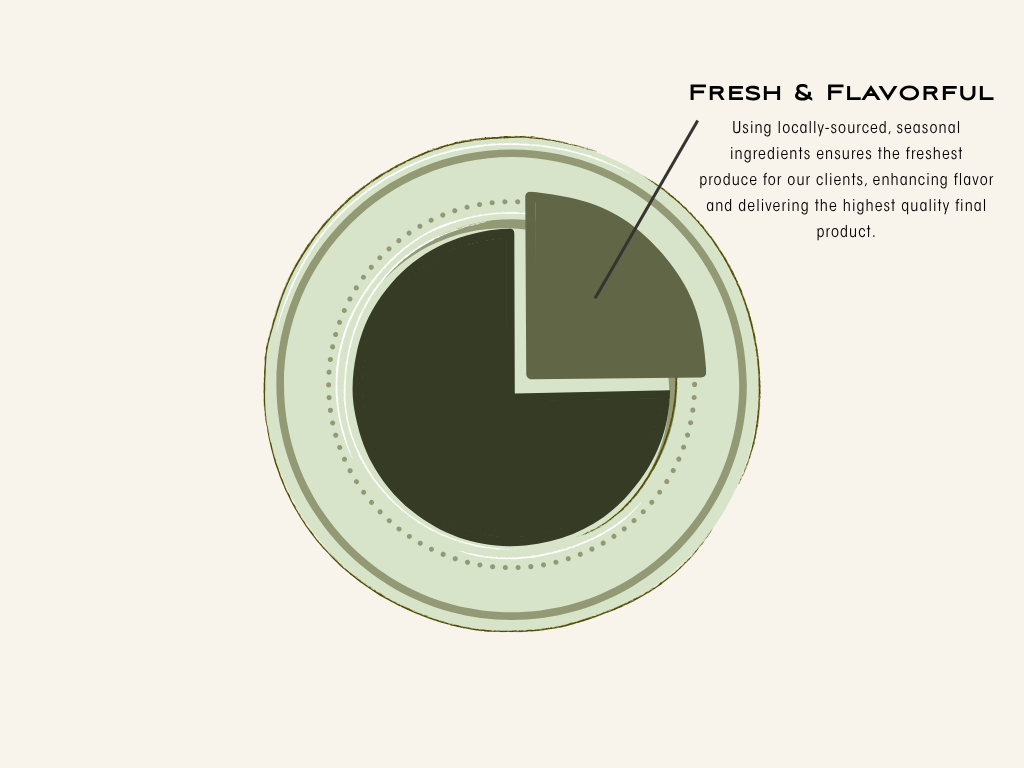
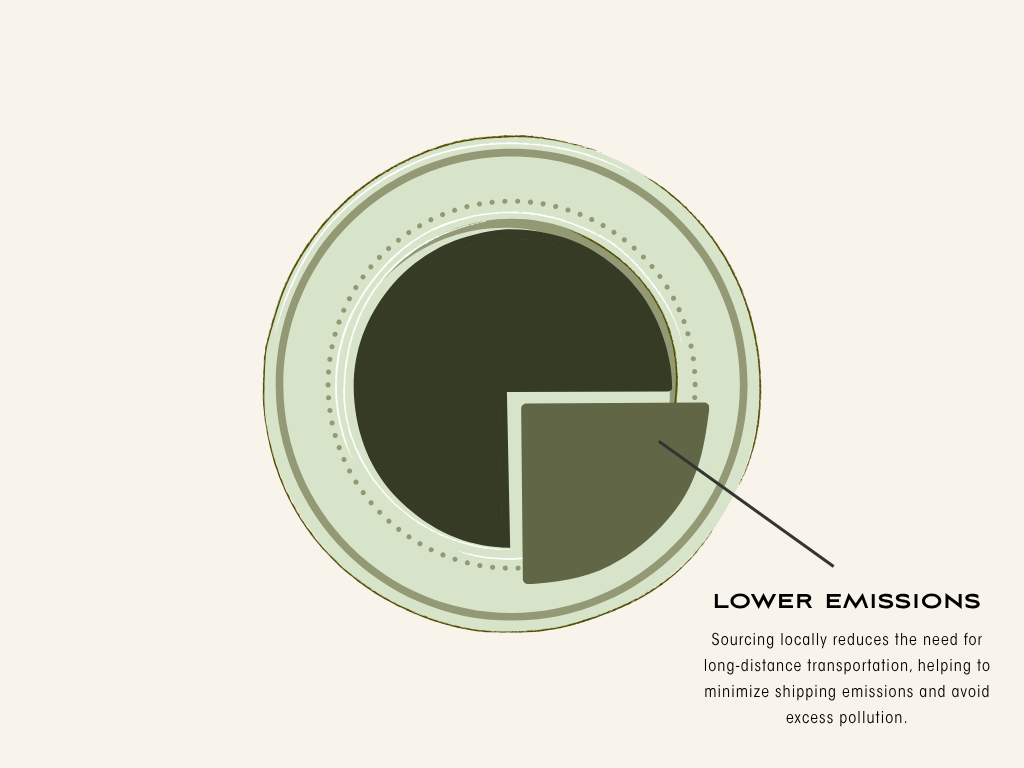
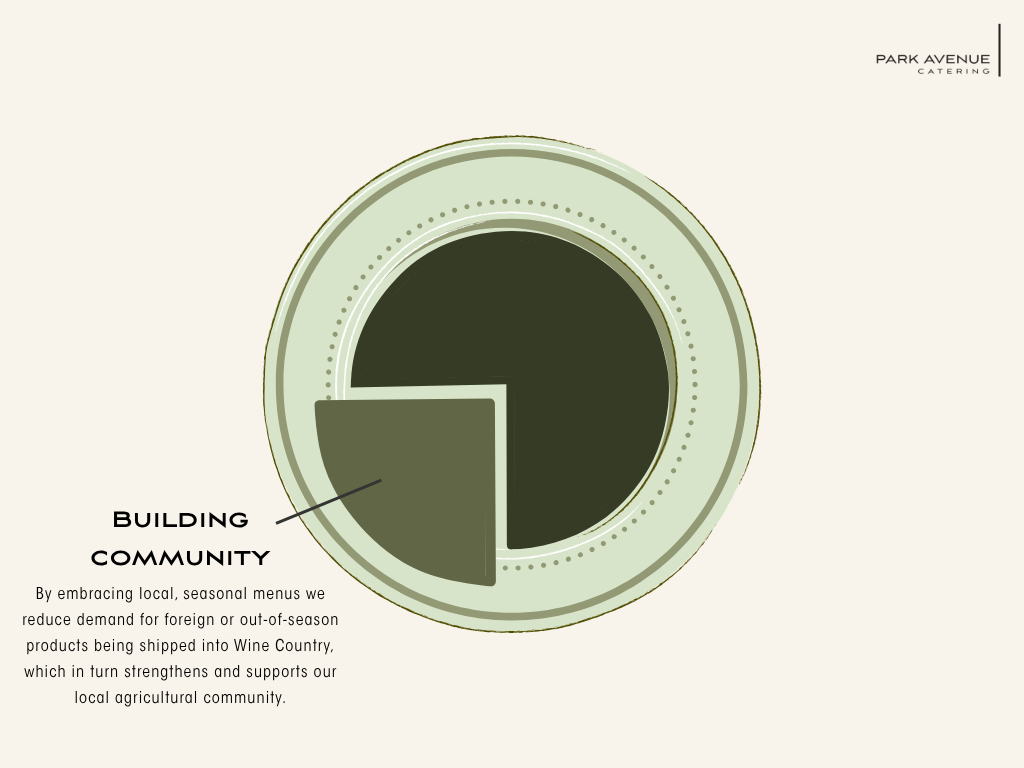
Choosing to source from local purveyors delivers real, tangible benefits for both the surrounding community and for you as a client. It strengthens regional farms and producers, supports a more resilient local food system, all while ensuring ingredients are fresher, more seasonal, and of higher quality. At the same time, it lessens demand for out-of-state or out-of-country ingredients, reducing carbon emissions and limiting excess pollution.
The Future of Green Events
the sector’s biggest sustainability challenges (and what we’re doing about it)
We often face sizable obstacles when planning green events. While we are committed to making environmentally responsible choices, those choices often require balancing cost, logistics, and practicality.
One of the biggest challenges is cost. Sustainable products, from compostable serviceware to biodegradable food wrap, often carry significantly higher price tags. Rather than passing those costs directly onto our clients, we've tried to build as many sustainable practices into our everyday operations as we can, so our clients can benefit without always paying a premium.
Food waste is another ongoing focus. Every event is unique, making accurate forecasting essential. We continually refine our ordering and production processes to reduce excess while ensuring every guest has an exceptional dining experience.
Local sourcing also requires flexibility. We prioritize ingredients from Sonoma County and surrounding regions whenever possible, but availability changes with the seasons and is ultimately dependent on our farmers and suppliers. Instead of forcing ingredients that are out of season, we design menus around what's growing locally, creating fresher food while supporting our regional agricultural community.
Transportation and energy consumption remain areas where we continue to improve. Hosting events in Wine Country naturally involves traveling to venues across Sonoma County and Napa Valley, transporting equipment, and operating commercial kitchens. Through careful logistics, vehicle planning, energy-efficient equipment, and ongoing operational improvements, we continue working toward reducing our environmental footprint. Looking ahead, we're excited about opportunities such as electric vehicles, expanded renewable energy, and ultimately moving closer to carbon neutrality.
